- Flanders, NJ
- Login
- Reviews
- FAQ
- Newsletter



Hornets: How To Identify Their Nests, Understand The Risks, And Keep Your Family Safe

Spotting a huge, football-shaped paper nest hanging dangerously near your roofline is a guaranteed way to ruin a perfectly good summer afternoon. You might be out in the yard, enjoying a weekend barbecue, when you suddenly hear that deep, unmistakable buzzing sound. Instantly, your focus shifts. You find yourself worrying about getting stung, and whether those severe allergic reactions might threaten your children or the family dog.
We see this exact scenario play out every single summer. Homeowners frequently confuse beneficial garden pollinators with highly aggressive hornets, which often leads to some truly dangerous DIY removal attempts. People grab a garden hose or a broom, completely underestimating the swarm waiting inside. By knowing exactly what you are looking at, you can properly identify these nests and understand the genuine medical risks involved.
What Are Hornets? (And How Do They Differ From Wasps?)
To properly handle a pest problem, we first have to understand the opponent. Hornets are actually a specific subset of the wasp family, but they are built differently, behave differently, and pose a significantly higher threat level than your average garden bug. When we get calls about “giant bees,” nine times out of ten, we are walking into hornet territory.
The Anatomy Of A Hornet
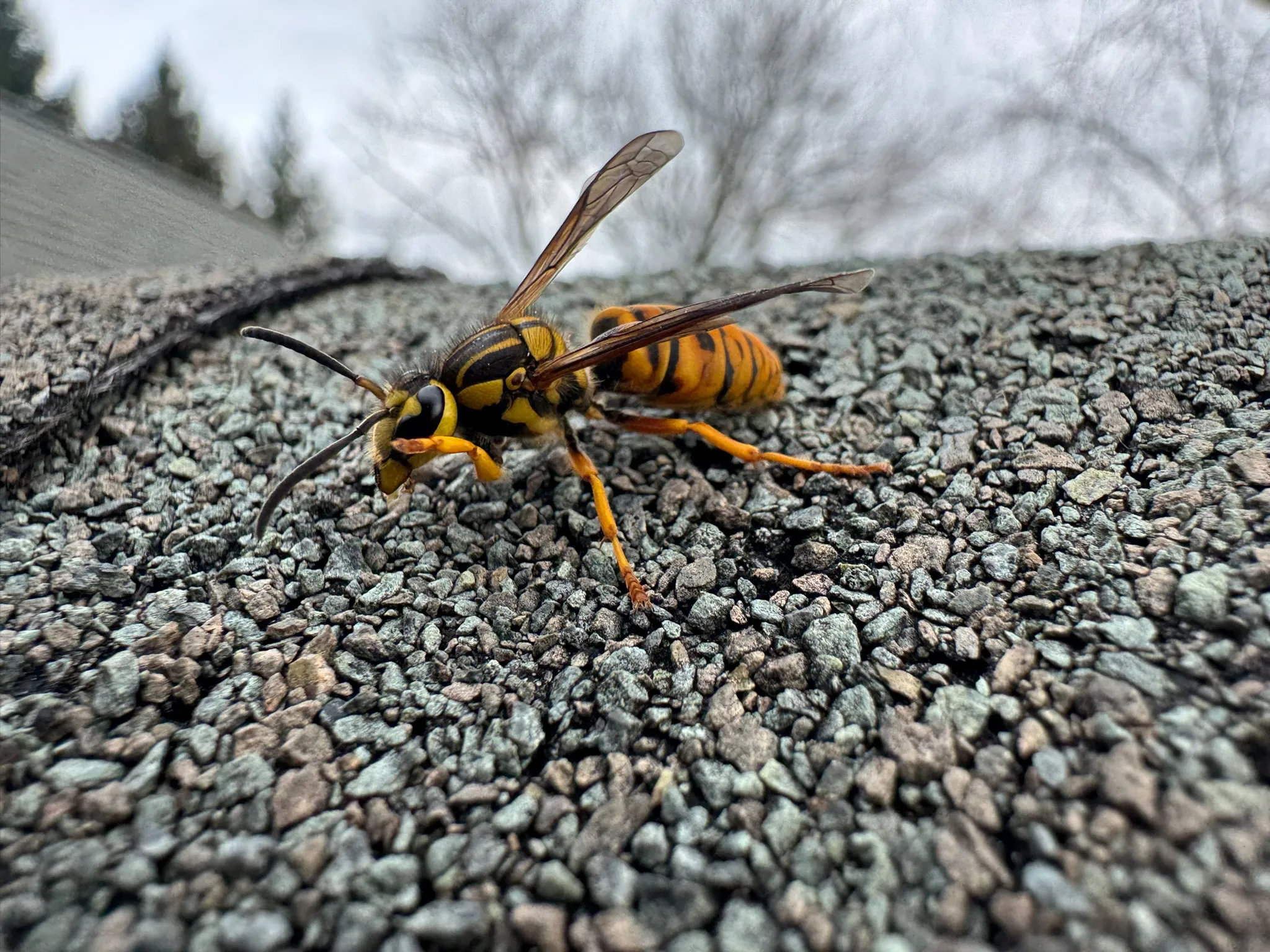
Let us break down what these creatures actually look like. They are huge stinging insects that can easily measure up to two inches long. Take the European Hornet, for example, which has become incredibly common in residential areas. It features a robust reddish-brown head, a thick set of mandibles designed for chewing wood and capturing prey, and a thick, yellow-striped abdomen.
Unlike honeybees, which leave their stingers behind and die after a single defense, hornet stingers are completely smooth. This evolutionary trait means their stingers do not detach after an attack. A single worker can strike you repeatedly in a matter of seconds, injecting venom with every single hit.
Hornets Vs. Yellow Jackets Vs. Paper Wasps
Telling them apart from other backyard pests is crucial for your safety. A lot of folks use the terms interchangeably, but treating a hornet colony like a paper wasp nest is a recipe for disaster. Here are a few key visual and behavioral differences to keep in mind when you are inspecting your yard:
● Size Matters: Hornets are huge, regularly reaching 1.5 to 2 inches in length. Yellow jackets and paper wasps are noticeably smaller, usually coming in under an inch long.
● Aggression Levels: Hornets are fiercely territorial. If you get within a few yards of their fortress, they will coordinate an attack. Paper wasps, conversely, generally leave you alone unless you directly swat at them or bump their nest. Yellow jackets are notorious scavengers that will ruin your picnic for a piece of meat or a sip of soda, but they do not typically build the giant aerial nests we associate with hornets.
● Nesting Locations: Hornets strongly prefer high, sheltered areas like upper tree branches, roof eaves, or inside the high peaks of attics. Yellow jackets usually build their sprawling colonies deep underground in abandoned rodent burrows.
How To Identify A Hornet Nest On Your Property
You do not want to wait until you are attacked to realize you have a colony thriving in your backyard. Identifying their handiwork early on is the best way to keep your household safe.
Visual Characteristics Of A Hornet Nest
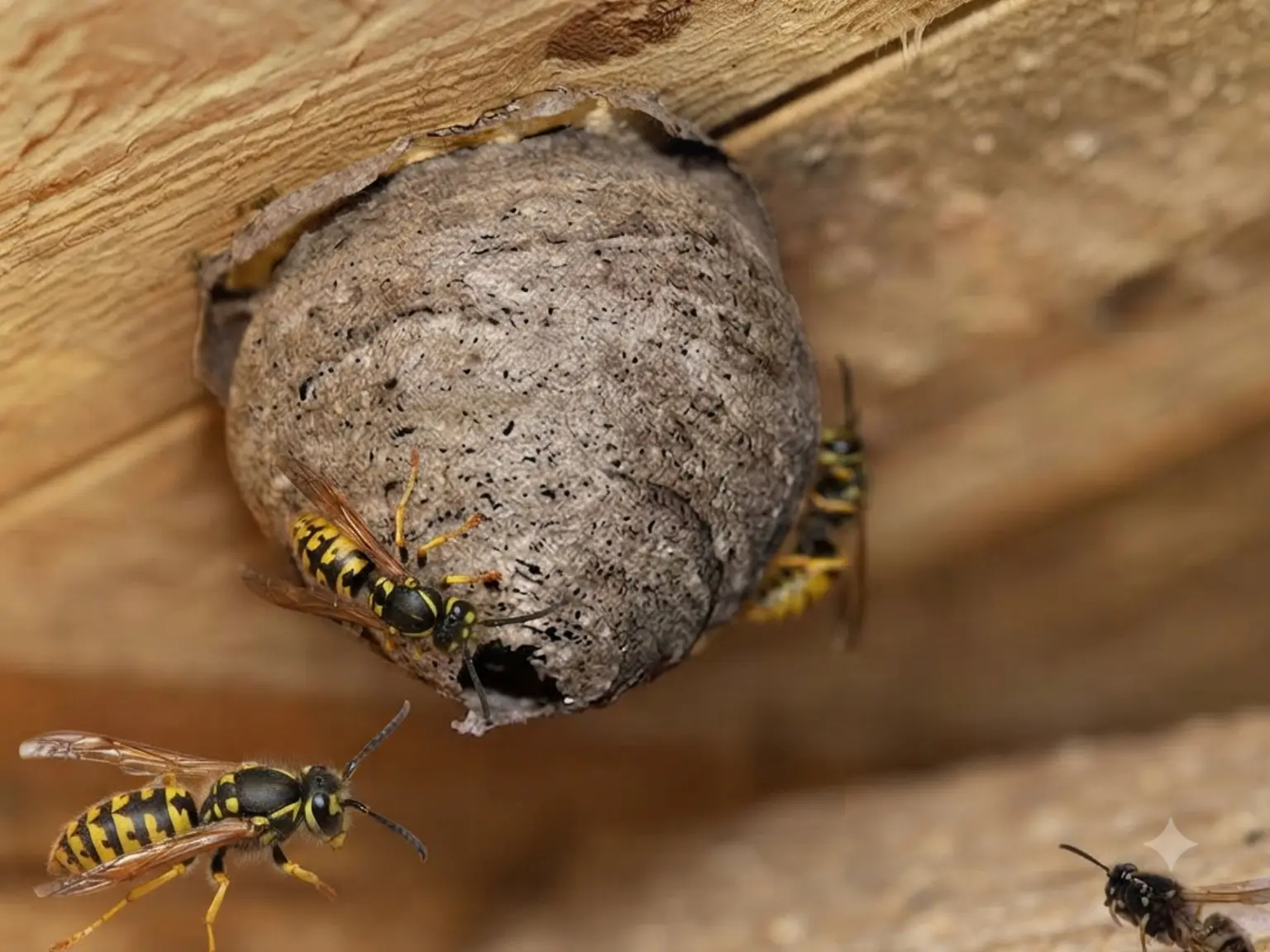
Look for a large, teardrop or football-shaped structure made of dull, grey paper. Workers chew raw wood fibers to build this surprisingly tough envelope. The entire nest is sealed shut except for a single, heavily guarded entry hole at the bottom. By late summer, these structures routinely grow to the size of a basketball.
Common Nesting Locations And Infestations
We typically find them built high up in mature trees, tucked tightly under roof eaves, or hiding inside dark attics. Sometimes the nest is completely concealed inside a wall void. If you see insects constantly flying in and out of a small crack in your siding, that is one of the clearest signs of a hornet infestation, and it requires an immediate professional inspection before they chew through your drywall.
Understanding The Risks: Are Hornets Dangerous?
The short answer is yes. We never want to use scare tactics, but the reality of living in close proximity to a mature colony is genuinely hazardous.
The Threat To Families And Pets
Hornets aggressively protect their nests. Just pushing a lawnmower too close can trigger a massive swarm. Once threatened, workers release an alarm pheromone that essentially flags us as targets for the rest of the colony. Our pets are incredibly vulnerable, too. Dogs love sniffing around the shrubs where these bugs hide, meaning they can suffer dozens of stings before we even realize they are in trouble.
Hornet Stings: Venom And Allergic Reactions
We need to treat a hornet sting as a serious medical event. Unlike a honeybee, these bugs pack a smooth stinger, allowing one angry worker to nail us repeatedly in the blink of an eye. Each strike pumps a fresh dose of venom into the skin, causing severe burning and heavy swelling that lasts for days. But the real danger is anaphylaxis. If someone gets stung and starts feeling dizzy, gets sick to their stomach, or struggles to catch a breath, we have to get them emergency medical care right away. Do not just sit around waiting to see if they feel better.
Understanding The Risks: Are Hornets Dangerous?
Living near a mature colony is a serious hazard. We never want to use scare tactics, but the danger is real.
Hornet Stings: Venom And Allergic Reactions
Because their stingers are smooth, a single worker can strike us multiple times in seconds. Every hit injects venom that causes intense, burning pain and severe swelling. For sensitive individuals, this triggers life-threatening anaphylaxis. If anyone feels dizzy, nauseous, or has trouble breathing after an attack, we must seek immediate emergency medical care. Never wait around to see if the symptoms pass on their own.
What To Do (And Not Do) If You Find A Hornet Nest
Your immediate reaction to finding a massive nest will likely dictate how the rest of your day goes. Taking the wrong action can put everyone in the vicinity in harm’s way.
The Biggest Mistakes Homeowners Make
In our experience in the field, sheer panic leads to terrible decisions. We have seen homeowners do incredibly dangerous things.
● Never throw rocks, baseballs, or shoes at the nest hoping to knock it down.
● Do not try to drown the nest with a garden hose; the paper is water-resistant, and the workers will simply swarm down the stream to find you.
● Put down the weak, over-the-counter bug spray you bought at the grocery store. It is rarely strong enough to drop them instantly.
● Above all else, avoid attempting any sort of daytime removal. That is when the workers are wide awake, highly active, and relying on their excellent vision to fight off threats.
Immediate Safety Steps For Your Family
Instead of attacking, your priority should be containment and distance. First, secure the area by establishing a safe zone of at least fifteen to twenty feet. Keep your pets indoors, warn your kids to stay entirely away from that side of the yard, and avoid running lawnmowers, leaf blowers, or creating loud vibrations near the colony, as vibration is a major trigger for an attack.
Professional Hornet Removal Vs. Diy
We frequently get asked if there is ever a time when a homeowner can handle hornet control on their own. While we always advocate for safety first, there is a very narrow window for DIY methods.
When Is It Safe To Use DIY Methods?
DIY pest control is really only viable for brand new, newly established nests in the early spring. We are talking about nests that are roughly the size of a golf ball, containing only the queen and maybe a few early workers. Even then, you should only attempt to handle it if the nest is easily accessible from the ground without needing a ladder, and you can spray it at night when the insects are dormant.
Why Professional Hornet Control Is Safest
Once a nest surpasses the size of a baseball, attempting hornet nest removal on your own is simply too risky. As certified operators, we know that mature colonies require commercial-grade treatments and heavy-duty, sting-proof protective suits.
Experts use strict Integrated Pest Management strategies to safely neutralize the queen, remove the physical structure entirely, and apply preventative treatments that stop the colony from ever rebuilding on your property. A professional hornet exterminator has the tools to reach second-story eaves safely and the knowledge to eliminate the entire population in a single visit.
How To Prevent Hornets From Nesting Near Your Home
Figuring out how to get rid of hornets is much harder than keeping them away in the first place. The best offense is a rigorous, proactive defense strategy starting early in the year.
Early Spring Prevention Tactics
Before the queens emerge from their winter hibernation in early spring to establish new colonies, take a slow walk around your house.
● Inspect your roofline and eaves for old, decaying nests and remove them.
● Check all of your window screens and repair any tears or holes.
● Completely seal up exterior wall voids, cracks in the siding, and gaps around utility pipes with high-quality silicone caulk.
● Cap your chimneys and ensure your attic vents are covered with tight wire mesh.
Removing Food And Water Sources
You also need to eliminate the things that attract foraging workers to your yard. If you take away their resources, they will move on to another neighborhood.
● Secure all of your outdoor garbage cans with tight-fitting, heavy lids.
● Manage and cover your backyard compost piles, ensuring food scraps aren’t exposed.
● Clean up any sugary, fallen fruit around your garden beds and fruit trees immediately.
● Change the water in birdbaths frequently and fix leaky outdoor spigots, as wasps and hornets need constant water sources to cool their nests during the summer heat.
Why Trust Permakill Exterminating Services?
When you are dealing with highly aggressive, venomous pests, relying on guesswork or internet hacks is incredibly dangerous. At Permakill Exterminating Services, we have spent years protecting local families from these exact threats. Our licensed technicians prioritize incredibly fast response times, completely transparent pricing, and specialized methods that keep your children and pets totally safe throughout the entire process.
We don’t just spray and walk away; we ensure your pest problem is handled permanently, the first time around. We treat your property with the exact same level of care and caution that we use to protect our own homes.
Conclusion
Identifying a pest problem early on is the absolute best way to protect your loved ones from painful stings and potentially serious allergic reactions. You should never underestimate the danger and coordinated aggression of a fully mature, active colony. If you spot a grey, papery structure hanging around your roofline, or notice a steady stream of large insects disappearing into your siding, do not take the risk yourself.
For reliable, professional hornet removal, contact Permakill Exterminating Services today for a thorough inspection and highly effective extraction. Let our local experts restore peace and safety to your backyard, so you can get back to enjoying your summer without constantly looking over your shoulder.
FREQUENTLY ASKED QUESTIONS
Q1. How do I know if I have a hornet infestation?
A. You will notice large wasps constantly flying near your roofline or eaves. If you see them repeatedly entering a specific crack in your siding or spot a grey paper structure, you have an active hornet infestation.
Q2. What is the best method for how to get rid of hornets?
A. Skip the DIY sprays. If you want to know how to get rid of hornets safely, let a pro handle it. Hitting a mature colony with weak store-bought spray just triggers a dangerous swarm.
Q3. When is the best time for hornet nest removal?
A. If you find a tiny, newly built nest in early spring, treat it at night when the bugs are sleeping. For anything larger, day or night does not matter for a pro with the right gear handling your hornet nest removal.
Q4. Why hire a hornet exterminator over using store sprays?
A. Store-bought cans rarely knock down the whole colony. A licensed hornet exterminator uses commercial-grade products that penetrate the thick paper walls, wiping out the queen so they do not rebuild the next day.
Q5. What are the best hornet prevention tips?
A. Start in early spring. Caulk cracks in your siding, fix torn window screens, and put tight lids on your trash cans. Good hornet prevention means cutting off their food and shelter before the queens wake up from hibernation.
Q6. Do I really need professional hornet removal for a small nest?
A. If it is smaller than a golf ball, you can usually handle it yourself from a safe distance. But once it grows larger than a baseball, professional hornet removal is the only safe option to avoid an aggressive attack.