- Flanders, NJ
- Login
- Reviews
- FAQ
- Newsletter


Hornets vs Yellow Jackets

A buzzing sound near your porch shouldn’t immediately ruin your summer afternoon, unless you’re dealing with highly aggressive stinging insects moving in. The transition from a peaceful backyard barbecue to a chaotic medical emergency can happen in seconds if you disturb the wrong nest. Mistaking a highly aggressive ground colony for a docile bumblebee is a very common and dangerous error.
Similarly, misidentifying a huge aerial nest can lead to painful stings and completely unsafe DIY removal attempts. While these stinging pests look remarkably similar to the untrained eye, one structural difference in where they nest tells you exactly what you are facing. Understanding hornets vs yellow jackets is the first crucial step in protecting your family and your pets.
Accurate identification dictates your entire response, helping you avoid severe structural damage to your home and unexpected hospital visits. Here is how to spot these pests from a safe distance, understand where they hide, and know exactly when it’s time to call an exterminator.
Quick Comparison: Aerial Builders Versus Ground Nesters
What is the main difference between these two intimidating summer pests? The primary distinction lies in their physical size, aggression levels, and specifically where they choose to build their growing colonies. The larger insect builds highly visible, paper-like aerial nests securely attached to tall trees or exterior roof eaves.
The smaller, brightly banded insects typically construct completely concealed nests deep underground or inside structural wall voids. Both species become highly dangerous when they feel their queen or their colony space is directly threatened. However, their day-to-day behavior and how they interact with humans differ drastically throughout the season.
| Trait | Hornet | Yellow Jacket |
| Size | Larger (Up to 1.5 inches in length) | Smaller (Roughly 0.5 inches in length) |
| Nest Location | Aerial (High in trees, roof eaves, attics) | Concealed (Underground burrows, wall voids) |
| Diet | Predatory (Hunts other garden insects) | Scavenger (Attracted to human food and sugar) |
| Aggression | Moderate (Highly defensive of the nest) | High (Aggressive scavengers, frequent stingers) |
What Are Hornets? Key Identification Factors
Physical Appearance
These particular pests are significantly larger than almost all other social wasps you will encounter during the warmer months. They typically feature deep brownish-red coloration or striking black and white color patterns across their bodies. You will not see the bright, neon yellow banding that is commonly associated with other aggressive summer scavengers.
Their sheer physical size often causes immediate panic when they fly near a residential home or outdoor gathering. It is easy to assume that a bigger insect means a higher level of unprovoked aggression, but that is not entirely true.
Hornet Nest Identification
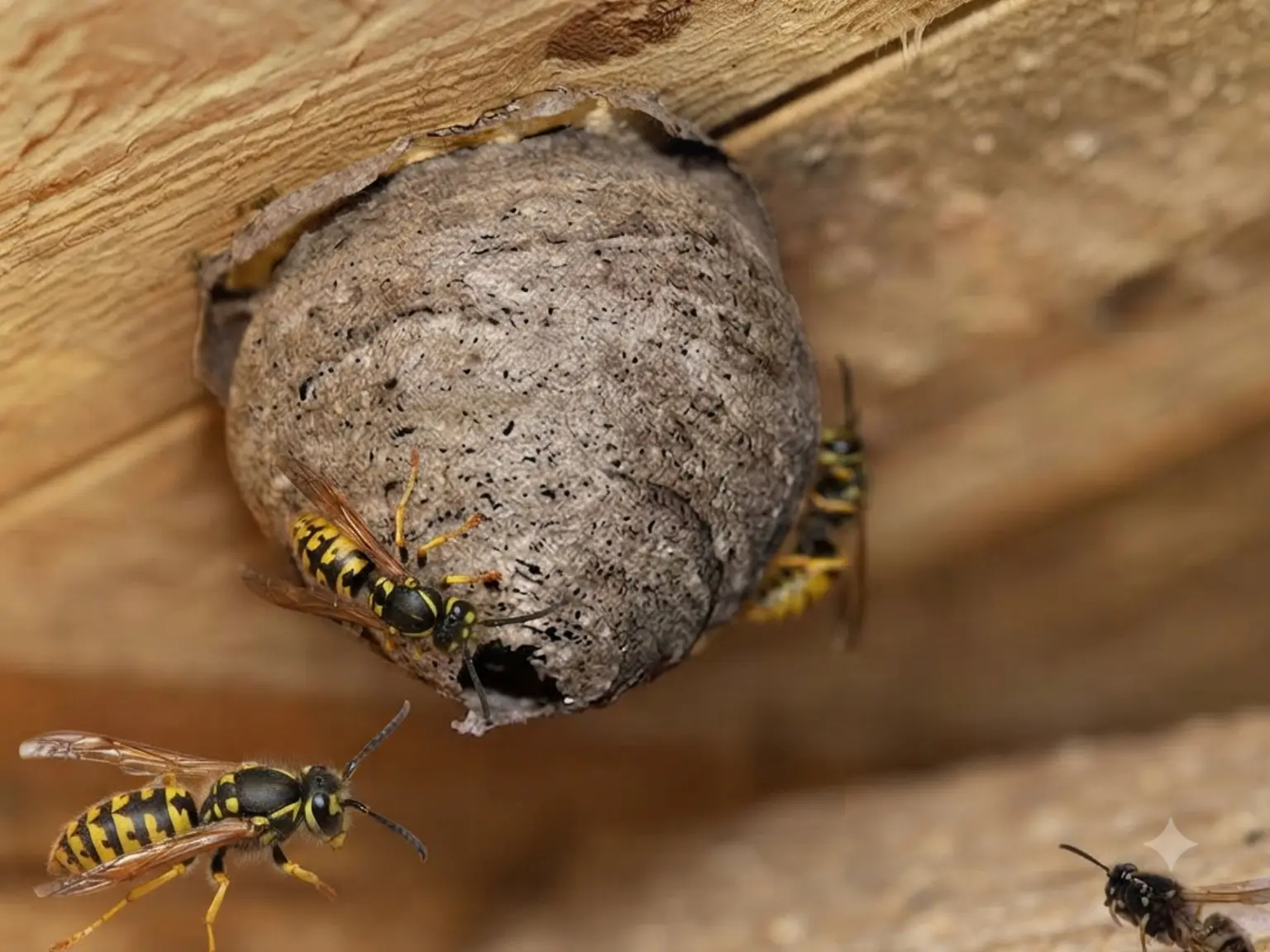
They are famous for constructing large, fully enclosed, paper-like aerial nests that can grow quite large. You will usually spot these impressive structures hanging high in tree branches or firmly attached to exterior roof eaves. Sometimes, if there is an easy access point, they manage to find their way into unsealed attics to build.
They rely on gathering chewed wood fibers mixed with their own saliva to construct these intricate, multi-tiered homes. These nests can easily grow to the size of a basketball or even larger by the end of the busy summer season.
Behavior and Aggression
While intensely protective of their immediate nesting space, they generally exhibit much lower unprovoked aggression than other species. They are primarily predatory insects that hunt other bugs rather than aggressively scavenging for food. You rarely find them hovering around your outdoor garbage cans or trying to land directly on your sugary sodas.
They prefer a steady diet of caterpillars, large flies, and other small, annoying garden pests that damage plants. However, having a basketball-sized nest right above your front door is simply an unacceptable risk for any homeowner.
What Are Yellow Jackets? Key Identification Factors
Physical Appearance
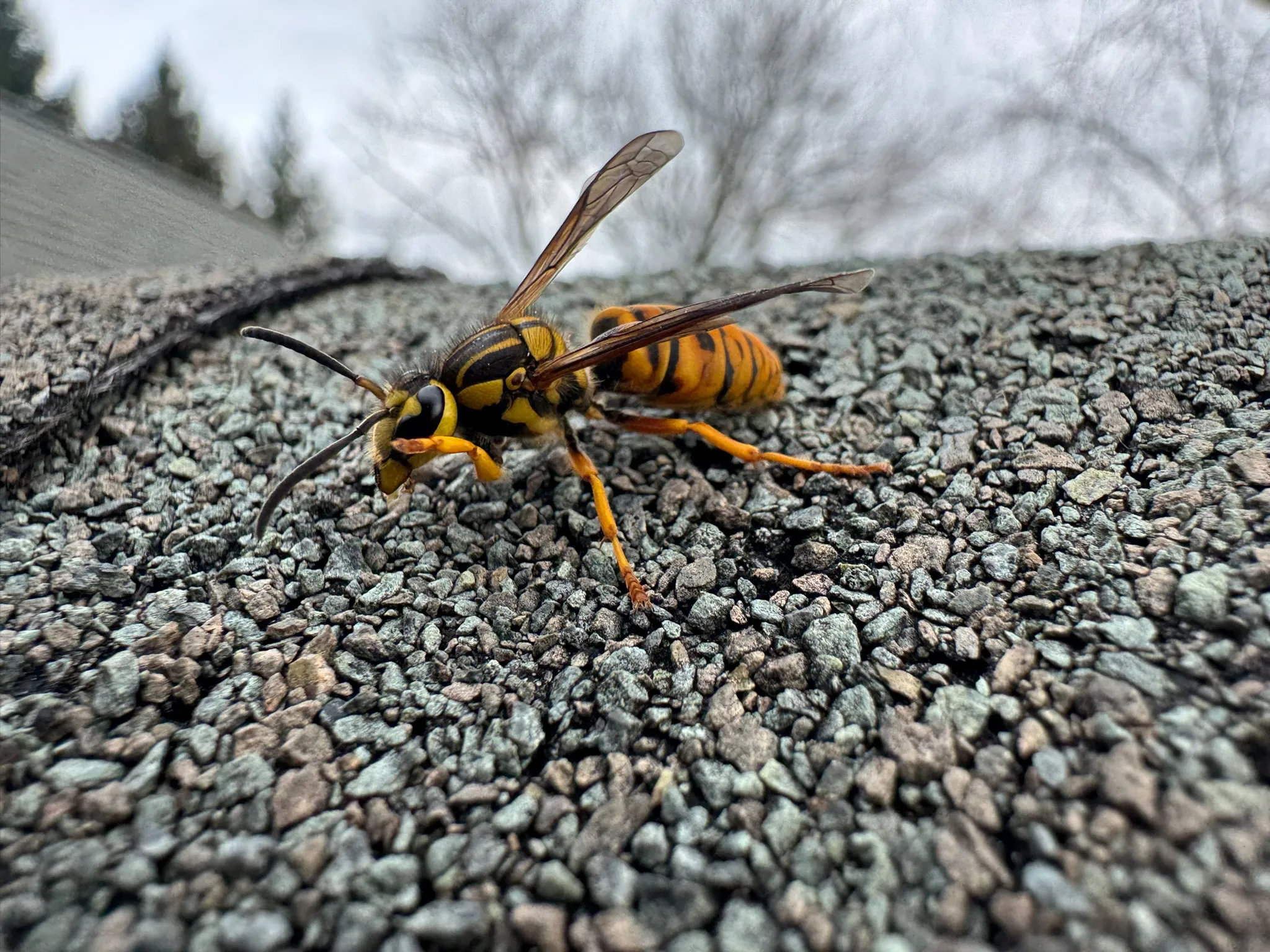
These specific stinging insects are much smaller, usually measuring roughly half an inch in total length. They prominently sport distinct, bright yellow and black banding across their abdomens and thoraxes, making them easily recognizable. Their vivid, high-contrast coloration serves as a natural warning sign to any potential predators in the area.
Because of their small size and bright colors, homeowners frequently mistake them for beneficial honeybees. This misidentification is exactly what leads to accidental nest disturbances and painful swarming incidents in the yard.
Yellow Jacket Nest Locations
Unlike the large aerial builders, they prefer completely hidden sanctuaries for their rapidly growing colonies. They frequently build sprawling ground nests inside abandoned animal burrows or hidden depressions in your lawn. They also love establishing large colonies deep inside the structural wall voids of residential homes.
Last summer, our technicians were called to a property where these specific pests had actually chewed entirely through drywall. The homeowners heard a faint, continuous scratching sound inside their living room wall for several agonizing weeks. Suddenly, hundreds of angry insects poured into their home through a very small, newly created hole.
Scavenging Behavior and Aggression
These pests are heavily drawn to human food, sugary drinks, and high-protein sources like grilled meats at barbecues. They exhibit high insect aggression when scavenging for resources at outdoor family gatherings and local parks. They will fiercely protect their queens and are widely known to chase perceived threats for very long distances.
They sting repeatedly because their stingers are completely smooth and not barbed like a typical honeybee’s stinger. This highly aggressive nature makes them one of the most dangerous pests to encounter while mowing the lawn.
The Stings: Which Is More Dangerous?
Sting Comparison
Comparing the sting intensity of these two pests is a very common concern for anxious homeowners facing an infestation. The larger insect delivers a highly painful sting with a significantly higher venom volume per individual strike. Their stinger is much longer, and victims often describe the initial pain as feeling like a heavy blow.
Conversely, the smaller scavenger’s true danger lies in their sheer, unbridled aggression and rapid sting frequency. They prefer to swarm in very large numbers, and a single insect will strike multiple times within just seconds. They also release a potent chemical alarm pheromone directly into the air when they sting a target.
Allergic Reactions
This invisible chemical signal marks you as a direct threat and actively calls the rest of the hidden colony. Once that pheromone is released, you must leave the area immediately to avoid a swarming attack. Multiple stings from either species can easily trigger severe, life-threatening medical risks for anyone involved.
According to the National Pest Management Association, stinging insects send roughly half a million people to the ER annually. Anaphylaxis is a severe, systemic allergic reaction that absolutely requires immediate, professional medical attention to be treated safely. Even if you are not highly allergic, dozens of stings can still cause serious systemic reactions and extreme discomfort.
When to Call Professional Pest Control
The Risks of DIY Removal
Attempting DIY pest control is the leading cause of severe stinging incidents around residential properties. Pouring gasoline down a ground nest is highly dangerous, illegal, and causes environmental damage to your property. Store-bought chemical sprays often just deeply aggravate the colony instead of actually eliminating the source of the problem.
These weak consumer sprays rarely penetrate deep enough into the twisting ground tunnels to reach the queen. This ineffective action triggers dangerous swarming behavior and forces the angry pests to find a new exit. If they are living inside a wall void, spraying the outside exterior entrance often forces them straight inside.
Signs You Need an Exterminator
You need to know exactly when it is time to step back, drop the spray can, and call the local experts. If you spot active nests near main entryways, your family and guests are constantly at risk of an unprovoked attack. Notice insects continuously emerging from inside the exterior siding? That strongly indicates a deeply entrenched wall void colony.
Finding active ground nests in high-traffic yard areas means your playing children and curious pets are in immediate danger. Never try to seal or caulk a wall void entrance if stinging insects are currently active inside the cavity. Booking an appointment for professional pest control is the only way to guarantee a safe resolution without property damage.
Why Trust PermaKill Exterminating for Stinging Insect Control
Dealing with highly aggressive stinging insects requires very specific training and highly specialized protective equipment. With years of dedicated on-the-ground experience, the team at PermaKill Exterminating knows exactly how to handle these severe threats. We have safely and effectively eradicated hundreds of hidden ground colonies and towering, hard-to-reach aerial nests.
Our licensed and insured technicians know exactly how these nests operate and how to eliminate the queen safely. We rely on professional-grade treatments and heavy-duty protective gear you won’t find at the local hardware store.
Instead of just spraying the hole and walking away, we track down exactly how far back the nest goes to solve the problem at the source. We’ll get the entire nest out, whether it’s inside your walls or dug into your yard.
We know an active nest is an immediate danger to your kids and pets, so we don’t make you wait around. Because we’re local, we can get to your house quickly and take care of the problem before anyone gets hurt.
Conclusion
Accurately identifying the exact pest on your property dictates the specific safety measures required for removal. Never risk a highly painful encounter with ground-nesting scavengers or massive aerial-nesting giants to save money. You should always prioritize your family’s safety over saving a few dollars on completely ineffective aerosol sprays.
The staggering hospital bills from a severe swarming incident will far exceed the reasonable cost of professional removal. Keep your outdoor trash cans tightly sealed and avoid leaving sugary sodas outside during the summer months. Do a slow, careful walk around your property every single spring to check for early signs of nest building.
Catching a very small paper nest early in the season makes the ultimate removal process much smoother and cheaper. Protect your home, your children, and your pets by scheduling a comprehensive professional inspection today. A dedicated professional team will ensure your yard remains a completely safe place to relax and unwind all season.
Frequently Asked Questions (FAQs)
Q. What is the main difference between hornets and yellow jackets?
A. The larger species builds big, visible aerial paper nests high in trees or directly on residential structures. The smaller, brightly colored pests typically nest deep underground or completely hidden inside residential wall voids.
Q. Are yellow jackets more aggressive than hornets?
A. Yes, they are highly notorious scavengers that aggressively defend their territory and their sugary food sources. They will actively seek out human food and aggressively swarm if their hidden ground nest is disturbed.
Q. Do hornets and yellow jackets have different nesting habits?
A. Yes. Aerial builders construct very large, fully enclosed, teardrop-shaped paper nests using chewed wood fibers. Ground nesters strongly prefer concealed locations like underground burrows, hidden yard depressions, or interior structural wall voids.
Q. Are hornet stings worse than yellow jacket stings?
A. A hornet sting packs more venom and definitely hurts more right off the bat. But yellow jackets are usually the bigger threat since they attack in angry swarms and will sting you over and over again.
Q. How can homeowners identify hornets and yellow jackets?
A. Look at the size, color, and nest location from a very safe distance. The large ones are dark-colored and build aerial nests, while the small ones are bright yellow and nest underground.
Q. When are hornets and yellow jackets most active?
A. Colonies reach their peak size and highest natural aggression levels during late summer and early fall. This is exactly when their natural food sources become scarce, and they start scavenging aggressively for human food.