- Flanders, NJ
- Login
- Reviews
- FAQ
- Newsletter


Stink Bugs, Ladybugs and Boxelder Bugs in Your Home: What New Jersey Homeowners Should Know

Summary: Stink bugs, Asian lady beetles, and boxelder bugs enter New Jersey homes during autumn to find warm, protected places to survive the winter. Although they do not cause structural damage or pose major health risks, they can create unpleasant odours, stains, and large indoor gatherings. The most effective prevention combines sealing exterior entry points with professional perimeter treatments between late August and early October, before the insects settle inside walls and attics.
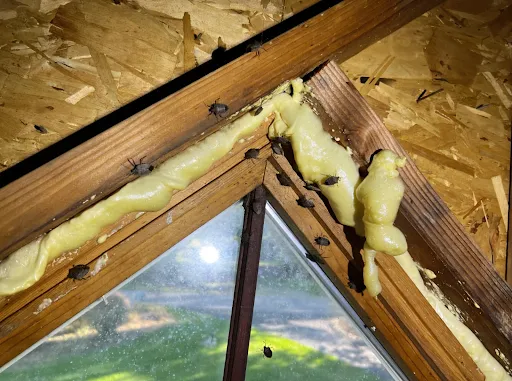
The familiar shock of discovering clusters of shield-shaped or spotted beetles congregating on your sunlit window sills is practically a seasonal tradition as the first cold snap hits New Jersey. Watching dozens of insects suddenly appear out of nowhere on your siding is an unnerving sight for any property owner.
However, you can breathe a sigh of relief knowing that these specific fall invaders do not eat framing lumber, reproduce in your mattresses, or destroy drywall. Instead, they are simply overwintering pests looking for a warm place to hide. During September, October, and November, your house acts as a giant thermal beacon, radiating heat that naturally attracts these insects as they desperately seek shelter from the impending winter freeze.
If you are dealing with stink bugs, ladybugs and boxelder bugs in your home, understanding their biology and overwintering behavior is the very first step to keeping them outside. By learning exactly why these nuisance pests target your property and identifying their preferred entry points, you can implement practical, long-term exclusion strategies to protect your family’s living spaces before the freezing temperatures arrive.
Why Do Stink Bugs, Ladybugs and Boxelder Bugs Come Inside?
Insects survive cold climates through diapause, a biological pause where adult bugs seek sheltered voids to outlast sub-freezing temperatures. They are not trying to infest your kitchen pantry; they are simply looking for a dormant resting space.
Modern and historic New Jersey homes alike possess specific architectural vulnerabilities that allow these insects inside:
● Gaps around window frames, sliding glass doors, and worn door thresholds
● Soffit vents, ridge vents, gable vents, and unscreened roof louvers
● Siding seams, separated corner boards, and warped fascia boards
● Utility line penetrations for cable, plumbing, and HVAC lines
● Deteriorating flashing around chimneys and roof intersections
These micro-openings act as highways. Insects pass through these small gaps and settle deep into wall voids, attics, and dropped ceilings for the winter.
Why Are They Often Found Around Windows?
Insects constantly collect on glass panes because they are phototactic (naturally attracted to light). Glass also captures solar warmth, making windows the warmest spot in a chilly room.
Finding twenty bugs crawling on your bay window does not mean they crawled directly through that specific frame. More often than not, they emerged from within your wall voids or ceiling joists, became disoriented by the indoor heating, and tried to head back toward exterior sunlight.
Stink Bugs in New Jersey Homes
When we talk about stink bugs locally, we are identifying the Brown Marmorated Stink Bug (Halyomorpha halys). You can spot them by their mottled brown coloration, the alternating light and dark bands on their antennae, and their distinct shield-like profile.
These pests spend their summers feeding on fruit and ornamental trees across agricultural areas in Morris, Sussex, Somerset, and Union counties. When crops dry down in early autumn, they shift their focus to residential exteriors. The afternoon sun heats west- and south-facing walls, turning certain sides of your house into massive, inviting landing pads.
Do Stink Bugs Bite?
No. Stink bugs do not bite people, transmit diseases, or feed on blood. Their mouthparts consist of piercing-sucking stylets designed strictly for extracting plant juices.
Their only real defense mechanism is chemical. When threatened or crushed, their abdominal glands release pungent aldehydes. Never squish them. Instead, gently capture them in a cup or use a small vacuum to suck them into a soapy water trap for odorless disposal.
Ladybugs or Asian Lady Beetles
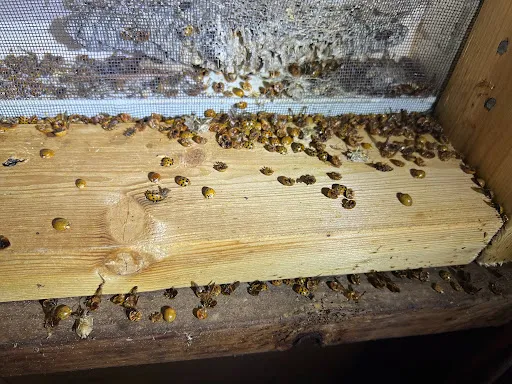
The clusters of spotted insects inside your house are rarely native, beneficial ladybugs. They are often Multicolored Asian Lady Beetles (Harmonia axyridis).
You can identify them by looking for a distinctive black “M” or “W” mark on the white pronotum located just behind their head. Their coloration varies wildly, ranging from pale orange to deep red, with or without black spots.
They are considered a significant indoor nuisance. When stressed, they secrete a yellow reflex-bleeding fluid. This secretion easily discolors white woodwork, window treatments, and painted surfaces, while releasing a noticeably stale odor.
Boxelder Bugs
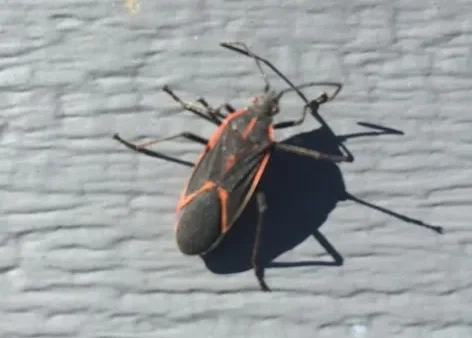
Boxelder bugs (Boisea trivittata) have a very distinct appearance. They feature a charcoal-gray to black body marked with sharp, reddish-orange lines running along the thorax and wing margins.
Their seasonal lifecycle revolves around feeding on the sap of female boxelder trees, as well as ash and silver maples. As temperatures drop, they display a strong tendency to bask by the hundreds on warm vinyl, brick, and stucco siding before finding hairline cracks around eaves and baseboards to hide in for the winter.
Why Does One House Have Hundreds While the Neighbor Has Almost None?
Pest pressure is rarely distributed evenly across a neighborhood. Several distinct factors determine why your house might be the primary target.
● Solar Exposure: South- and west-facing homes without large shade trees absorb substantial radiant heat, signaling insects from hundreds of yards away.
● Vegetation Proximity: Yards bordering woodlands, open fields, or containing mature maple and boxelder trees provide direct harborages close to the foundation.
● Architectural Tightness: Older construction with settled mortar, uncaulked trim, and loose soffits offers more potential entry points than modern homes.
When Is the Best Time to Treat Stink Bugs and Other Occasional Invaders?
Late August through early October is the single most effective period for preventative exterior barrier applications. Once the first hard frost hits, the insects have already bypassed the exterior.
Professional applications must focus heavily on eaves, fascia, upper window headers, utility entry points, and rooflines. This targeted approach is why booking fall exterior pest treatments before the autumn chill settles is the most critical step you can take. Treating a home in November or December, after insects are already secured behind wall insulation, yields incredibly minimal control.
What If the Bugs Are Already Inside?
Spraying baseboards with standard aerosol insecticides does virtually nothing to reach bugs resting deep inside insulation or roof cavities.
For mechanical intervention, the safest method is HEPA vacuuming. Use a simple trick: insert a nylon stocking into the vacuum hose and secure it with a rubber band to catch the bugs before they get ground up in the motor. Targeted attic and void dust treatments can also be applied by professionals when appropriate.
The Goal Is Reduction, Not an Unrealistic Promise
Set grounded expectations immediately: no exterminator can extract every dormant bug from enclosed wall framing without physically tearing open the drywall. It is important to distinguish between honest, integrated pest management and empty guarantees of complete overnight eradication.
Should You Seal Your Home Against Stink Bugs?
Physical pest-proofing using silicone or polyurethane caulk, copper mesh, backing rod, and durable door sweeps is your best initial defense. Utilizing proper exclusion techniques for home pests around windows, doors, utility conduits, and attic fan covers keeps them outside.
However, there is a strict timing warning. Never seal exterior weep holes or primary siding joints in mid-to-late winter. Doing so traps the insects inside the walls, inevitably forcing them inward into heated living rooms and bedrooms as they look for an escape route.
Are These Bugs Dangerous?
Direct Answer: No. They do not sting, spread blood-borne pathogens, or destroy load-bearing structural studs like termites or carpenter ants.
The practical nuisance factors include:
● Pungent odors produced by stressed stink bugs
● Fabric and wall staining from beetle defensive secretions
● Accumulation of insect carcasses in light fixtures, ceiling globes, and window tracks
● Minor respiratory irritation or allergic reactions in rare instances of large Asian lady beetle gatherings.
Why Am I Seeing Stink Bugs in My House in Spring?
The bugs emerging inside your living spaces in March and April actually entered during the previous autumn.
This phenomenon is caused by thermal confusion. As your house warms and outdoor daylight lengthens, the dormant bugs wake up. They attempt to follow the warmth and light to reach the outside. In their confusion, they inadvertently walk through electrical switch plates, recessed lights, and baseboard cracks directly into your main living quarters instead of back outside.
How Can New Jersey Homeowners Prevent Occasional Invaders?
● Inspect and patch ripped windows, patio door, and porch screens.
● Install tight nylon-brush or rubber sweeps along the bottom of all exterior doors.
● Seal gaps around exterior spigots, dryer vents, and electrical conduits.
● Inspect attic ridge vents and immediately replace any crumbling insect screening.
● Schedule preventative exterior treatments before nighttime temperatures consistently drop below 50°F.
Professional Stink Bug and Occasional Invader Control in New Jersey
Over-the-counter surface sprays simply wash away in autumn rains or fail to reach the high eaves where bugs actually land.
The PermaKill approach connects true biological understanding with targeted exterior perimeter protection tailored directly to New Jersey homes. Homeowners dealing with recurring infestations across northern and central New Jersey should always seek professional New Jersey pest management services to schedule a localized seasonal inspection and customized fall treatment.
Why Choose PermaKill Exterminating?
We are local New Jersey pest management experts specializing in targeted exclusion and timely preventative treatments for overwintering pests. With years of experience, we intimately understand how New Jersey’s transition from hot summers to brisk autumns dictates insect migration, particularly around unique local architecture like split-level siding transitions.
Our team focuses on integrity-first communication, educating clients on realistic pest reduction rather than selling chemical overuse inside family living quarters. We rely on an exterior-first strategy to protect homes by stopping insects at the structural boundary, preserving your indoor air quality and comfort. Don’t wait until hundreds of overwintering bugs settle into your walls for the winter.
Conclusion
Finding your walls covered in stink bugs, Asian lady beetles, and boxelder bugs is a frustrating, but highly predictable, part of the autumn season. By understanding their overwintering biology and targeting their entry points in late summer, you can protect your living spaces. Focus on robust physical exclusion and timed exterior treatments to stop the invasion early. Contact PermaKill Exterminating today to secure your home before the cold weather pushes these nuisance pests indoors.
Frequently Asked Questions
Q. Why are stink bugs suddenly in my house?
A. Stink bugs enter homes during the late summer and fall searching for a protected, warm location to survive the winter. They enter through small exterior gaps and remain dormant in wall voids until indoor heating draws them out into living spaces.
Q. Why do I have so many ladybugs in my house?
A. The insects you are seeing are likely Multicolored Asian Lady Beetles. They congregate in large numbers on sunlit walls before squeezing into architectural gaps around your windows and siding to survive the cold season.
Q. Why are boxelder bugs coming into my home?
A. Boxelder bugs feed on local trees all summer and naturally migrate to the warm siding of residential homes in autumn. From there, they slip under gaps around siding, windows, doors, eaves and utility penetrations and into wall voids for warmth.
Q. Are ladybugs in the house a problem?
A. Yes, while they do not damage wood, Asian Lady Beetles secrete a yellowish defense fluid that easily stains walls, window frames, and fabrics, while also emitting a foul, stale odor.
Q. How do you keep overwintering bugs out of your house?
A. The best prevention is physically sealing exterior cracks around windows, doors, and vents with silicone caulk, combined with a professional exterior perimeter treatment applied in late summer before the first freeze.
Q. Do stink bugs bite people or pets?
A. Asian lady beetles can occasionally pinch or bite people or sting. Their mouthparts are designed strictly for feeding on plants, not people or pets.
Q. Why am I seeing stink bugs in my house in spring?
A. These bugs actually entered your home the previous fall. As spring warms up, they wake from dormancy and accidentally wander into your living spaces while trying to escape outside.
Q. What is the best way to remove stink bugs indoors?
A. Gently sweep them into a cup of soapy water, or vacuum them up using a nylon stocking secured over the hose to prevent odors inside the vacuum motor.
Q. Should I squish stink bugs or ladybugs?
A. Never crush them. Stink bugs release a foul odor, and Asian lady beetles secrete a yellow fluid that may stain your walls and fabrics.
Q. When should I treat overwintering bugs?
A. The best time for preventive exterior treatments is between late August and early October, right before temperatures drop and bugs begin seeking shelter. Treatments are product-label-dependent and property-specific.