- Flanders, NJ
- Login
- Reviews
- FAQ
- Newsletter


Why Are Cave Crickets in My Basement? A New Jersey Exterminator Explains

You walk into your basement, turn on the light, and suddenly
something that looks like a cross between a cricket and a spider jumps across the floor.
If you live in New Jersey, there’s a good chance you’ve just encountered a cave cricket, also commonly called a camel cricket or spider cricket.
Cave crickets are common in New Jersey homes, particularly in
basements, crawl spaces, garages, and other cool, damp areas. Their long legs, humpbacked appearance, and unpredictable jumping can make them intimidating, but they’re primarily a nuisance pest.
The bigger question is:
Why are cave crickets in your basement in the first place?
At PermaKill Exterminating, that’s one of the first things we try to determine. Simply killing the crickets you see doesn’t address the conditions that allowed them to become established.
What Does a Cave Cricket Look Like?
Cave crickets get their name because they naturally prefer
environments similar to caves: dark, cool, protected, and damp.
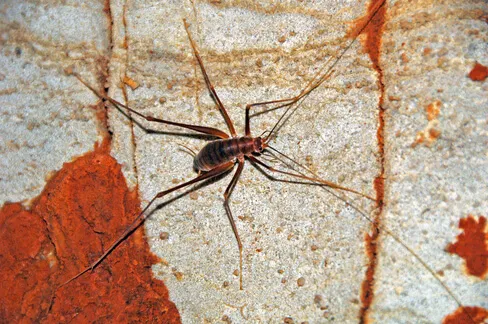
They’re also called camel crickets because of their distinctive humpbacked appearance. Some homeowners call them spider
crickets because their extremely long legs can make them resemble large spiders at first glance. They’re brown, with long antennae and no wings.
Unlike the field crickets you hear chirping outside during the
summer, cave crickets are wingless and don’t produce the familiar cricket chirp.
What they can do extremely well is jump.
Their large hind legs allow them to leap when startled. If one
appears to jump directly at you, don’t take it personally. It’s not attacking you; jumping is part of its defensive behavior.
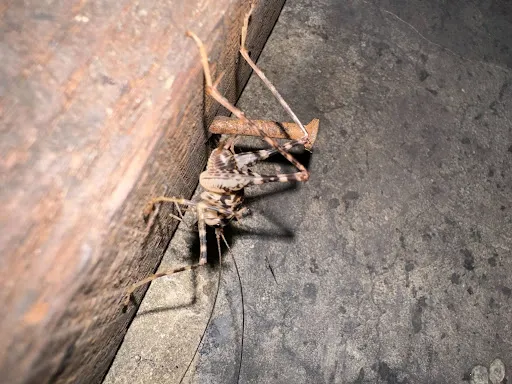
cricket or spider cricket, found during a PermaKill service call in New Jersey.
Why Do I Have Cave Crickets in My Basement?
The answer usually starts with one word:
Moisture.
Cave crickets favor dark, moist areas, including damp basements and crawl spaces.
After decades of treating New Jersey homes, we’ve found that
cave cricket activity keeps turning up in the same spots. Some of the first places we look include:
- Around sump pumps
- Where water lines enter the home
- Damp areas along basement walls
- Concrete block foundations
- Foundation cracks and openings
- Around Bilco (bulkhead) doors
- Crawl spaces
- Other cool, dark areas with elevated moisture
If your basement provides the moisture, darkness, and protection cave crickets are looking for, it can become an ideal place for them to live.
The Problem May Start Outside Your Home
Finding cave crickets in your basement doesn’t necessarily mean the problem started there.
Cave crickets naturally live outdoors in protected, moist environments.
Around a home, they may be found near:
- Wood piles
- Mulch, leaf litter, and landscape debris
- Dense vegetation
- Stone piles or retaining walls
- Landscape debris
- Damp areas around foundations
- Areas beneath decks
- Sheds and garages
From there, cave crickets can find openings that allow them to enter your home.
That’s why effective cave cricket control shouldn’t focus exclusively on the cricket you see jumping across the basement floor. You also have to consider where the crickets are coming from and why
your property is attractive to them.
Why Do I Suddenly Have So Many Cave Crickets?
Seeing an occasional cave cricket doesn’t necessarily indicate a major problem.
Regularly seeing them is different.
Cave crickets can become established in protected areas of a structure. They can settle into wall voids, hollow block cores, and gaps along the foundation.
They’re also nocturnal, which means much of their activity occurs when you’re not watching.
You might see very little activity during the day and then walk into the basement at night and suddenly find several crickets moving across the floor.
If you’re repeatedly seeing cave crickets, the important question isn’t simply how to kill the ones you see.
It’s:
What conditions are allowing this population to survive?
Does Having Cave Crickets Mean I Have a Moisture Problem?
Not necessarily a serious water problem, but persistent cave cricket activity is often associated with elevated moisture or humidity.
That’s why PermaKill looks beyond the insects themselves.
A sump pump, condensation, damp foundation walls, poor airflow, water intrusion, or naturally high basement humidity can all create conditions cave crickets prefer.
Some moisture problems can be corrected. Others are simply characteristics of a particular home.
We understand that not every New Jersey basement can be
transformed into a perfectly dry environment. In homes where
moisture will always be present to some degree, cave cricket control may require ongoing management.
Will a Dehumidifier Help With Cave Crickets?
It can be an important part of the solution.
Because cave crickets prefer humid environments, lowering the
relative humidity in your basement makes the area less attractive to them.
That’s why PermaKill frequently recommends using
a dehumidifier when basement conditions warrant it.
A dehumidifier alone may not resolve an established cave cricket problem, particularly if crickets continue entering from outside. But moisture reduction can be an important part of a long-term control program.
Why Killing the Cave Crickets You See Isn’t Always Enough
Suppose you walk downstairs and kill three cave crickets. Problem solved?
Maybe not.
Those three crickets may only represent the insects you happened to see.
If favorable conditions remain around the foundation, inside a crawl space, within concrete blocks, or elsewhere in the basement, additional crickets may continue appearing.
That’s why PermaKill uses an Integrated Pest Management
(IPM) approach rather than relying on a single treatment for every house.
How PermaKill Treats Cave Crickets
At PermaKill, cave cricket control begins with an inspection. During an inspection, we look at::
- Where are the crickets active?
- Where could they be entering?
- What moisture conditions are present?
- Are exterior conditions supporting the cricket population?
- What treatment makes sense for this particular home?
Once we understand the situation, we develop a treatment program based on the conditions we find.
Our Integrated Pest Management approach may combine targeted treatments with non-chemical control measures designed to make the environment less favorable for cave crickets.
Rather than treating every house according to the same checklist, we tailor the program to the property.
Moisture Control Is Part of Cave Cricket Control
One of the most important non-chemical measures is reducing excess moisture whenever practical.
Depending on the property, recommendations may include:
- Using a dehumidifier in the basement
- Improving ventilation and airflow
- Correcting obvious sources of water intrusion
- Addressing drainage problems
- Reducing moisture around the foundation
The objective is simple: create an environment that’s less attractive to cave crickets.
Don’t Forget the Outside of Your Home
Our inspection may also include looking at conditions outside the home.
Wood piles, vegetation, debris, damp areas, low decks, and other protected locations can provide excellent cave cricket habitat.
This is an important distinction:
Simply treating the entire yard isn’t the solution to a cave cricket problem.
Blanket yard treatment is usually less useful than addressing shelter, entry points, and any areas identified during inspection. Instead, we look for conditions that encourage cave cricket populations and help homeowners understand what changes can reduce those conditions.
Inspection, appropriate treatment, moisture management, exterior habitat reduction, and sealing entry points provide a much more complete approach than simply killing individual crickets.
Can I Prevent Cave Crickets From Coming Back?
You can significantly reduce the conditions that encourage them. You can help by:
- Running a dehumidifier in damp basements
- Repairing obvious moisture problems
- Keeping gutters and downspouts working properly
- Directing water away from the foundation
- Removing unnecessary leaves and debris around the house
- Keeping firewood away from the foundation
- Improving airflow beneath low decks when possible
- Sealing appropriate cracks and openings around the structure
- Checking basement doors and windows for gaps The goal isn’t just to eliminate today’s cave crickets.
It’s to make your home less attractive to tomorrow’s cave crickets.
Do Cave Crickets Come Back Every Year?
They can.
If the conditions that attracted cave crickets remain, you may see recurring activity.
That’s especially true in homes with naturally damp basements, crawl spaces, wooded surroundings, or exterior conditions that provide abundant cricket habitat.
This doesn’t mean the problem can’t be controlled.
It means successful pest management requires understanding the environment rather than assuming every pest problem can be fixed with a single application with one application.
Frequently Asked Questions About Cave Crickets
Q. Are Cave Crickets and Camel Crickets the Same Thing?
A. Yes. Homeowners commonly use the names cave cricket, camel cricket, and spider cricket for these long-legged, humpbacked crickets.
Q. Why Are Cave Crickets in My Basement?
A. Basements can provide the darkness, protection, moisture, and humidity cave crickets prefer. They may also enter from favorable habitats around the exterior of the home.
Q. Are Cave Crickets Dangerous?
A. Generally no. Cave crickets are a nuisance, although they can occasionally damage stored fabrics. Their appearance and jumping can be alarming, but they aren’t considered a significant threat to people.
Q. Why Do Cave Crickets Jump at You?
A. They’re not intentionally attacking you. Their powerful hind legs allow them to jump rapidly when startled, and the direction of the jump can be unpredictable.
Q. Do Cave Crickets Chirp?
A. No. Unlike the familiar field crickets homeowners hear outdoors, cave crickets don’t produce the characteristic cricket chirping sound.
Q. Where Should I Look for Cave Crickets in My Basement?
A. At PermaKill, some of the areas where we commonly encounter activity include sump pumps, water line entry points, damp foundation walls, concrete block walls, Bilco doors, crawl spaces, and other dark areas with elevated moisture.
Q. Will a Dehumidifier Get Rid of Cave Crickets?
A. Reducing humidity can make your basement considerably less attractive to cave crickets and is an important part of prevention. An established problem, however, may also require professional treatment and attention to entry points and exterior conditions.
Q. When Should I Call a Professional?
A. If you keep seeing cave crickets, find large numbers of them, or can’t tell where they’re coming from, a professional inspection can help identify the conditions supporting the activity and determine an appropriate treatment plan.
Professional Cave Cricket Control in New Jersey
PermaKill Exterminating has been helping New Jersey homeowners control cave crickets for decades.
We’re a locally owned, family-operated pest management company, not a national franchise, and our approach reflects what we’ve learned from treating real New Jersey homes.
We don’t assume every basement or every cave cricket problem is the same.
We inspect the property, evaluate moisture and environmental
conditions, identify areas of activity and potential entry points, and develop a treatment program based on what we actually find.
If you’re tired of cave crickets jumping across your basement
floor, contact PermaKill Exterminating to schedule an inspection and find out what’s causing the problem at your home.